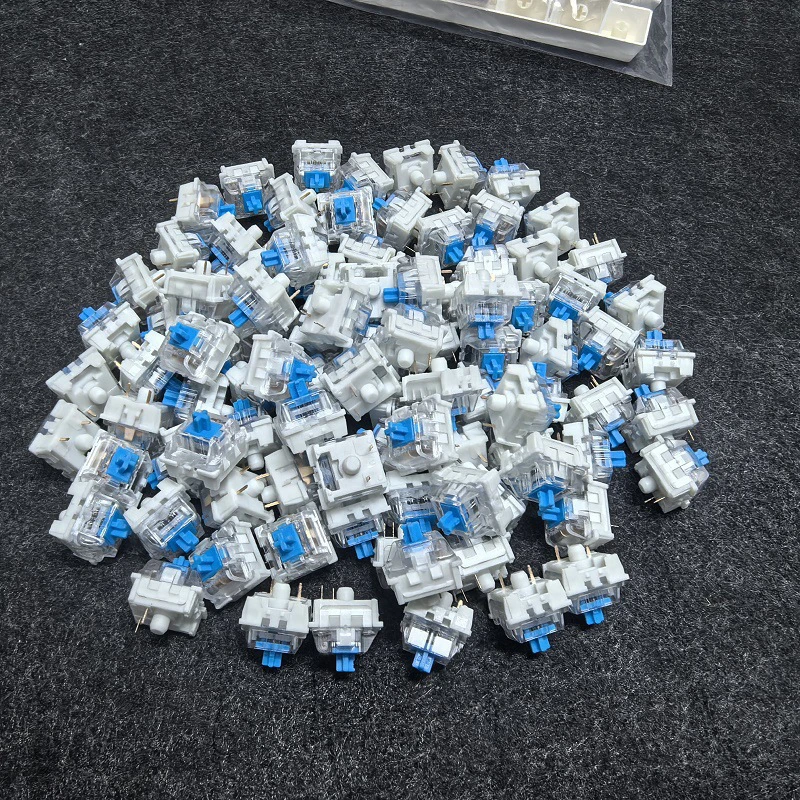
Is the PCB switch orientation south-facing?
North-facing LEDs light shine-through legends brighter, but their inverted housing causes the top row of Cherry-profile keycaps to hit the switch casing on bottom-out.
Translating ambiguous vendor claims, socket orientations, and mounting specifications into clear desktop acoustic and ergonomic outcomes.
Identify whether switch leg clipping will be required before purchasing plate-mount or PCB-mount switches.
Separate stiff tray-screwed standoffs from genuine silicone sock and poron strip isolation suspensions.
Avoid switch-housing collision on Cherry-profile rows when selecting backlit or solid OEM keycaps.
Direct-from-factory stores often list aspirational battery counts and vague acoustic terminology. Apply these baseline structural checks first.
North-facing LEDs light shine-through legends brighter, but their inverted housing causes the top row of Cherry-profile keycaps to hit the switch casing on bottom-out.
Many budget listings claim 'gasket experience' while retaining rigid center brass standoffs that pierce the plate and negate peripheral flex gaskets entirely.
Look for explicit mentions of 2.4GHz polling rates and Bluetooth chipset identifiers rather than decorative battery mAh numbers without sleep-state specs.

Learn how linear, tactile, clicky, and silent mechanical keyboard switches differ, how 3-pin and 5-pin sockets match, and how to safely swap stems.
View Spec Breakdown →
A practical guide to choosing a mechanical keyboard for long typing sessions, with three current listings compared on layout, switch type, hot-swap support and price.
View Spec Breakdown →We do not claim hands-on endurance teardowns or fabricated decibel tests when reviewing overseas retail listings. Our work focuses on isolating vendor-provided specifications, cross-referencing socket schematics, and providing practical buying questions.
Seller-advertised numbers remain labeled as seller claims. We highlight what is verified in listing documentation vs what remains unproven.
Trade-offs between brass, FR4, PC, and aluminum plates are explained through physical mechanical principles, not promotional sound clips.